

Smart Connected Farms: Turning Data into Profit
Managing a modern farm is a delicate balance between maximizing yields and controlling costs. IoT devices and remote monitoring transform that balance by delivering real‑time data from soil sensors, weather stations, drones, pumps, and livestock collars to your phone or dashboard. With this constant flow of information, farmers can see exactly when to irrigate, fertilize, harvest, or repair equipment—without leaving their desk. Studies show that IoT soil sensors can lift yields by around 10–15%, while AI‑driven irrigation systems deliver yield increases of 20–25% and generate cost savings per acre by optimizing inputs. Agricultural data analytics further reduce water use by roughly 20%, turning resource efficiency into tangible savings. Long‑term projections from leading technology firms suggest that connected systems could eventually boost crop yields dramatically and save tens of billions of gallons of water annually.
By combining IoT data streams with AI algorithms, farmers gain predictive insights that transform operations. Machine‑learning models analyze soil moisture, nutrient levels, weather forecasts, and equipment status to recommend precisely when and where to irrigate, fertilize, or deploy machinery. Remote monitoring of pumps, wells, and storage tanks helps prevent breakdowns and ensures consistent water supply. Remote control features mean you can start irrigation or adjust greenhouse conditions from a smartphone—freeing up time and reducing labor costs.
IoT isn’t just about hardware; it’s also a powerful tool for the businesses selling these technologies. By gathering usage data from deployed sensors, vendors can predict maintenance needs and proactively support customers. Sales and marketing teams can identify high‑ROI prospects and tailor messaging around yield gains and cost savings. Operations leaders can forecast sensor demand based on seasonal trends, while customer success teams deliver remote diagnostics and software updates. Companies that offer complete platforms—combining devices with analytics, mobile apps, and support—stand out from competitors and drive faster adoption.
Image Prompt Seed:
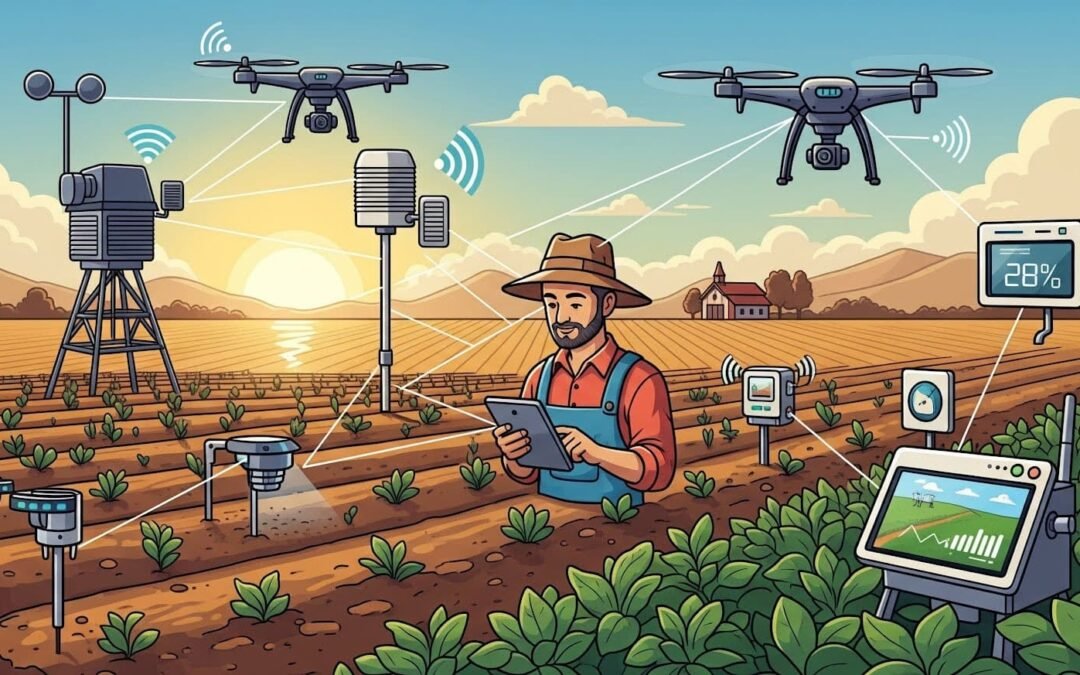
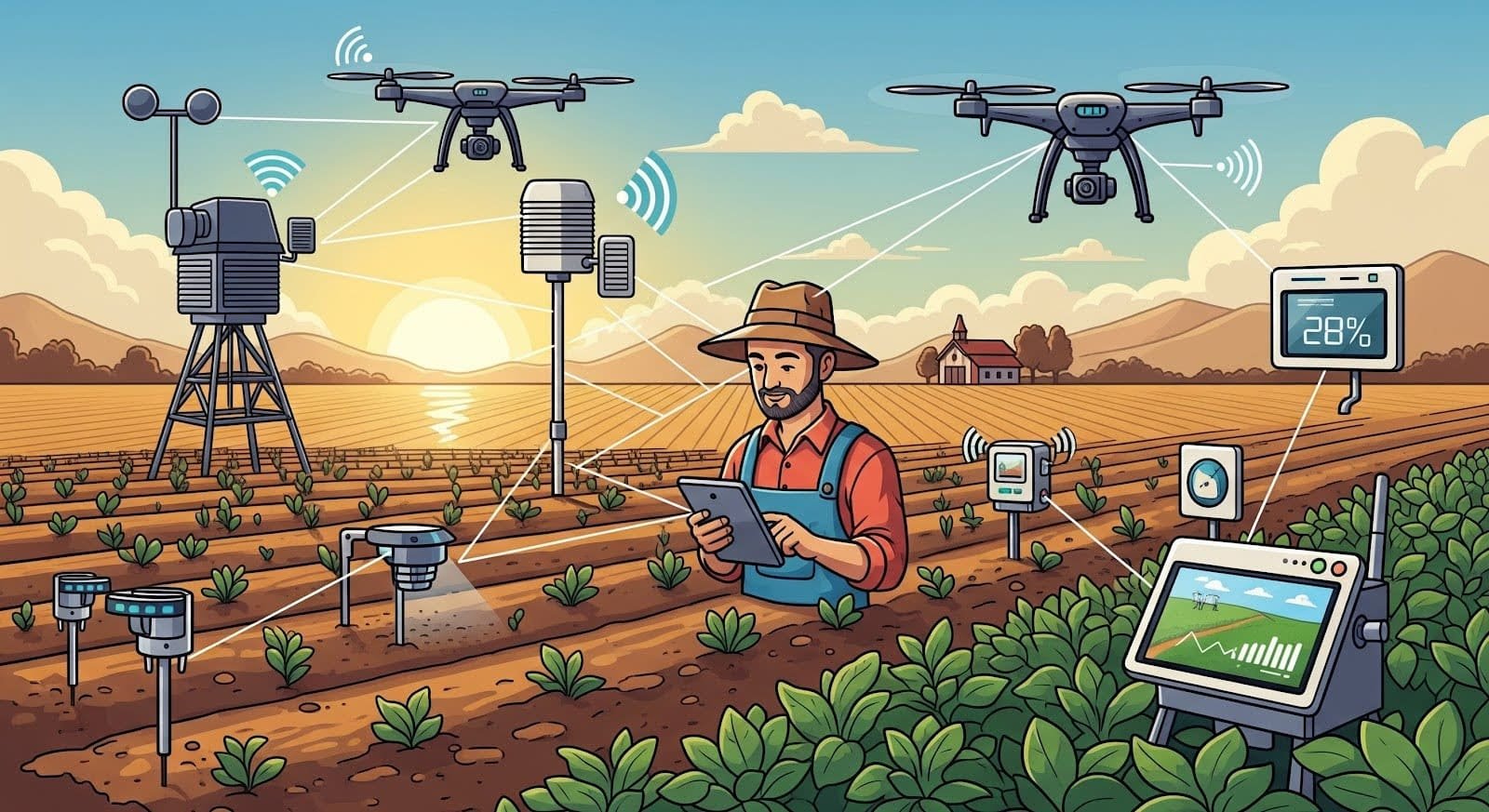
“A network of IoT sensors and devices spread across a farm: soil probes, weather station, drones in the sky, and a farmer checking data on a tablet. Modern yet rural feel, sunrise glow.”